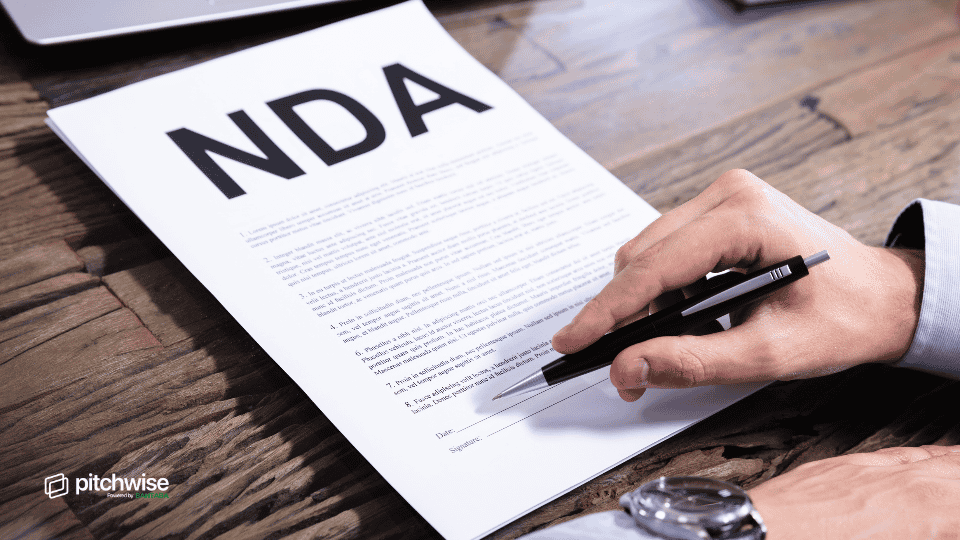
Quick answer: For a fundraise, you usually don’t need an NDA: most VCs won’t sign one for early diligence, and asking can slow the conversation. Use email verification, download blocking, per-investor links and staged access instead. For M&A, NDAs are standard: buyers expect to sign one before seeing anything confidential, especially when they could be competitors. A click-through NDA built into the data room is the quickest way to handle it.
Why most VCs won’t sign NDAs
- Volume. A VC sees hundreds or thousands of companies a year, many in overlapping markets. Signing NDAs with all of them would expose the firm to claims whenever it backs a similar company.
- Norms. Founders and VCs work on trust and reputation. A VC that leaks confidential information damages its own deal flow.
- Timing. Early diligence covers your deck, model and metrics. The genuinely sensitive material comes later.
Asking for an NDA before a first meeting can signal inexperience. Some firms will simply pass.
When an NDA does make sense
| Situation |
NDA? |
Why |
| First conversations with VCs | No | Norms and volume; use tracked links instead |
| Late-stage diligence with a lead investor | Sometimes | Lawyers may agree confidentiality terms in the term sheet |
| Strategic or corporate investor | Often | They may compete with you or work with competitors |
| Selling the company | Yes | Standard practice; buyers may be competitors |
| Partner or vendor due diligence | Often | Sharing security, contract or technical details |
| Sharing source code or detailed customer data | Yes | High sensitivity at any stage |
What to use instead of an NDA in a fundraise
| Control |
What it does |
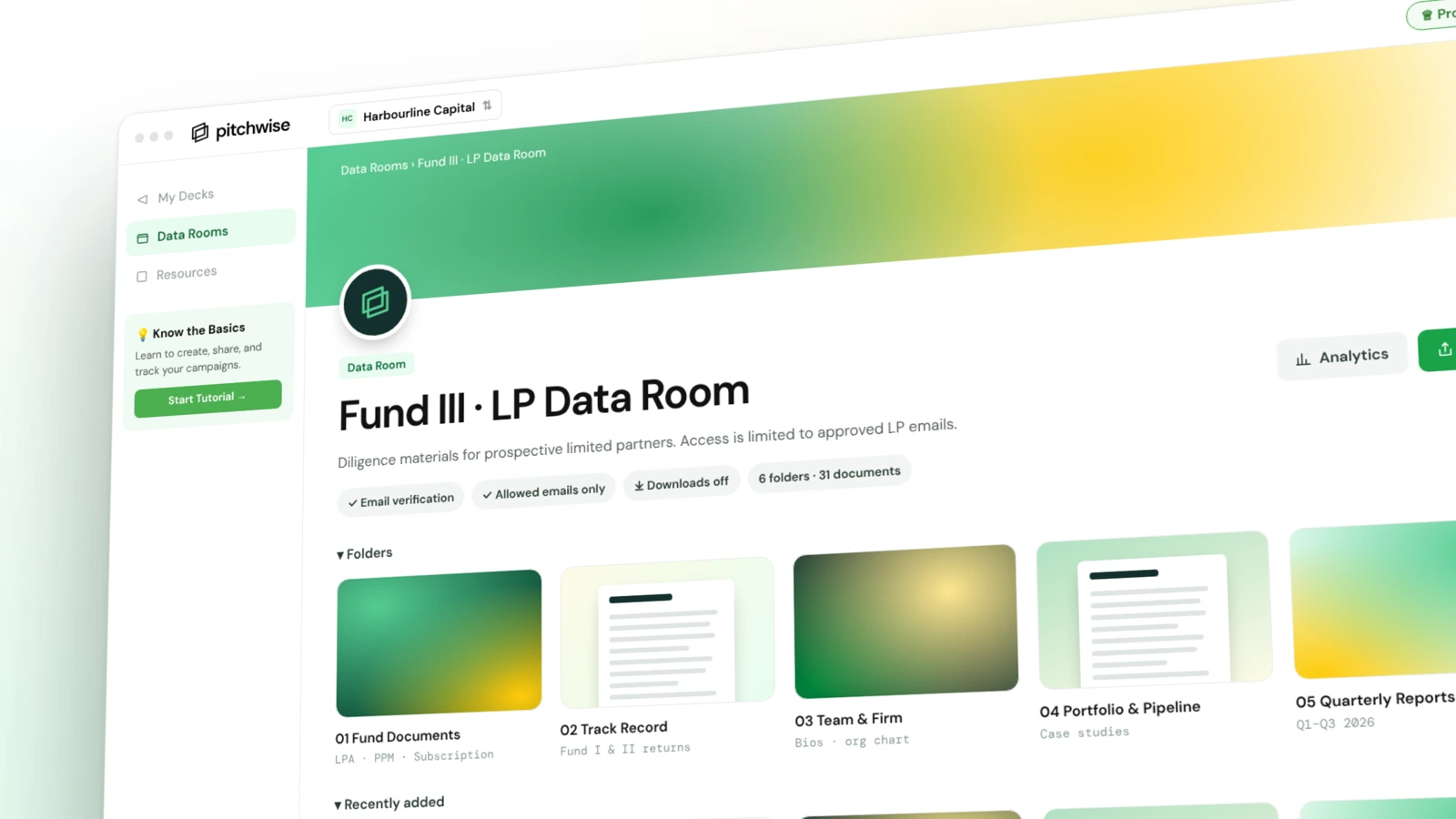
| Email verification | Every view is tied to a named person |
| Download blocking | Documents stay in the viewer, not on laptops |
| One link per investor | Revoke access individually when a conversation ends |
| Staged access | Sensitive folders open only after a term sheet |
| Page-level tracking | You know exactly who read what |
| Watermarking | Leaked screenshots can be traced |
In our State of Fundraising 2026 data, 77% of links require an email before opening and 91.2% block downloads. That’s how most founders protect themselves without an NDA. More in data room security for founders.
How NDAs work in an M&A data room
- Teaser without the company name goes out first.
- Interested buyers sign the NDA, either as a separate document or as a click-through before entering the room.
- Access opens in stages: summary, then financials, then contracts and legal for a preferred bidder.
- The NDA covers what can be shared, with whom, how long obligations last and what happens to documents if talks end.
A click-through NDA records who accepted, when, and from which email, which saves chasing signatures from every buyer. See the sell-side due diligence checklist.
Mutual or one-way?
A one-way NDA protects only the party sharing information, which is usual when you’re selling or sharing diligence material. A mutual NDA protects both sides, which suits partnerships or strategic deals where the other party will share confidential information too. Buyers sometimes ask for a mutual NDA to protect their own bid details. Your lawyer can advise which fits.
Standstill and non-solicit clauses
In M&A, NDAs often include two extra protections:
- Non-solicitation: the buyer can’t approach your employees, customers or suppliers for a set period if the deal doesn’t happen. This matters most when buyers are competitors.
- Standstill: mainly for public companies, preventing the buyer from acquiring shares or making a hostile approach.
For a private company sale, non-solicitation is the clause owners care about most. Make sure it covers key staff and your largest customers.
How to handle an investor who asks you to sign their NDA
Occasionally a corporate investor or a strategic partner asks you to sign their NDA before they share their plans. Read it carefully. Large companies’ standard NDAs can include broad definitions, long durations or clauses that restrict what you can build. Have a lawyer review it, and push back on anything that limits your business beyond the specific information shared.
Combining an NDA with technical controls
An NDA gives you a legal remedy after a leak. Technical controls reduce the chance of one. The strongest set-up uses both:
| Layer |
Purpose |
| NDA or click-through terms | Legal obligation and remedy |
| Email verification | Every view tied to a named person |
| Download blocking | Documents stay in the viewer |
| Watermarking | Leaked screenshots traceable |
| Staged access | Sensitive files open only when needed |
| Engagement tracking | Evidence of who read what, and when |
What a data room NDA should cover
- What counts as confidential information
- Who the recipient may share it with (advisers, financiers)
- Use only for evaluating the transaction
- No approaching your employees, customers or suppliers
- Return or destruction of materials if talks end
- How long the obligations last
- Governing law
Have your lawyer draft or review it. A template rarely fits every deal.
Protect your data room without slowing the deal
Pitchwise is a secure document and virtual data room tool. Use email verification, download blocking and per-recipient links on Pro, for $17 a month billed annually, and see who reads every page. Start free
Quick decision guide
| Question |
If yes |
If no |
| Is the other party a VC in early diligence? | Skip the NDA; use technical controls | Keep going |
| Could the other party compete with you? | NDA with non-solicitation | Keep going |
| Are you selling the company? | NDA before anything beyond the teaser | Keep going |
| Are you sharing source code, customer lists or pricing? | NDA, plus staged access | Technical controls are usually enough |
If you’re unsure, ask your lawyer. A short conversation costs less than a leak.
Frequently asked questions
Do VCs sign NDAs?
Rarely for early diligence. Most VC firms see thousands of companies a year, many in overlapping markets, and signing NDAs with all of them would expose the firm to claims whenever it backs a similar company. Some firms will agree to confidentiality terms later in the process, often as a clause in the term sheet once they’re the lead investor. Corporate venture arms are more likely to sign, because they may have competing businesses.
Should I ask investors to sign an NDA before seeing my data room?
Usually not. Asking can slow the conversation, and some firms will decline to proceed. Protect yourself instead with email verification, download blocking, one link per investor and staged access, so sensitive documents open only after a term sheet. In our State of Fundraising 2026 data, 77% of links require an email before opening, and 91.2% block downloads, which is how most founders handle it.
Do buyers sign NDAs in M&A?
Yes. It’s standard practice before a seller shares anything beyond an anonymous teaser, and serious buyers expect it. The NDA usually covers use of information, non-solicitation of staff and customers, return or destruction of documents, and how long obligations last. See the sell-side due diligence checklist.
What is a click-through NDA?
A click-through NDA is shown on screen before a viewer can enter a data room. The viewer accepts it, and the data room records who accepted, when and from which email address. It’s faster than collecting signed PDFs from every buyer and works well when you have many parties. Check with your lawyer that a click-through is enforceable for your deal and jurisdiction.
Does an NDA stop leaks?
No. An NDA gives you a legal claim if someone breaches it, but it doesn’t physically stop a leak, and enforcing it can be slow and expensive. Technical controls make leaks less likely and easier to trace: email verification, download blocking, watermarking and per-party links. Use both on sensitive deals.
How long should an NDA last?
Two to three years is common for M&A and partnership NDAs. Some information, such as trade secrets, may be protected for longer. Your lawyer will suggest a term that fits the deal.