The NDA is one of the most misunderstood legal instruments in the startup world. Founders either avoid NDAs entirely (and expose themselves to real risk) or request them everywhere (and signal inexperience to the people who matter most). Getting this right is less about the document itself and more about understanding when confidentiality is actually useful.
This guide covers when to use an NDA, when not to, what the document should include, and the specific context most startup founders get wrong: asking investors to sign one.
What an NDA actually does
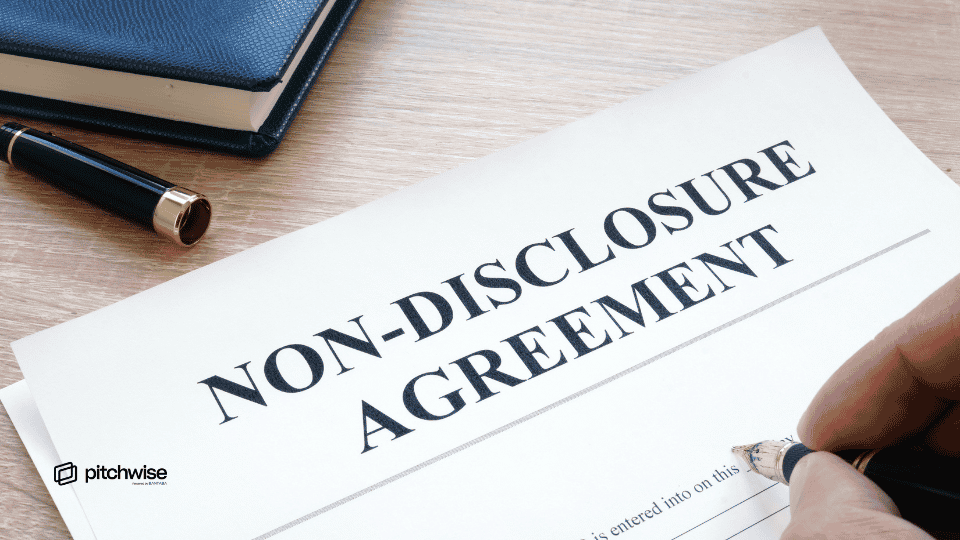
A non-disclosure agreement (NDA) is a contract in which one or more parties agree to keep certain information confidential, not to use it for purposes outside the agreement, and sometimes not to disclose that the conversation happened at all. It creates a legal obligation; breach gives the aggrieved party grounds to sue for damages or seek an injunction.
The NDA does not make information secret. If a party leaks confidential information, you cannot un-leak it. The NDA gives you legal recourse after the fact, which is meaningful in some contexts (especially commercial relationships with competitors) and nearly meaningless in others (a seed-stage conversation with an angel investor).
When startups should use an NDA
Technical partnerships and integrations
When you are sharing proprietary technical architecture, algorithms, or trade secrets with a potential technical partner or integration vendor, an NDA is appropriate. The counterparty often has both the capability and incentive to use the information beyond the intended purpose, and the disclosed information has genuine commercial value.
Enterprise sales pilots
Enterprise buyers often require mutual NDAs before evaluating vendor products. This protects both sides: the buyer shares internal use cases and data, the vendor shares the roadmap and pricing. Mutual NDAs in this context are standard and expected.
Employees, contractors, and advisors
All employees and contractors who access confidential company information should sign a combined NDA and IP assignment agreement (sometimes called a PIIA, Proprietary Information and Invention Assignment). This is a core legal instrument that investors check during due diligence. Missing PIIAs are one of the most common reasons due diligence stalls.
M&A conversations
When sharing detailed financial information, customer data, or technical architecture in the context of a potential acquisition, an NDA is standard. Both parties have meaningful information to protect, and the transaction context creates real disclosure risk.
When startups should NOT use an NDA
Investor conversations at the seed stage
This is the situation where most early-stage founders make the wrong call. Requesting an NDA from a seed investor before sharing your pitch signals that you do not understand how the industry works. Professional investors see hundreds of pitches a year, many on similar themes. Signing an NDA before each conversation would create legal exposure they cannot manage. Most seed investors will decline to sign, and some will pass on the deal because the request reveals inexperience.
The protection you actually need at this stage is not an NDA; it is not sharing anything truly proprietary (a unique algorithm, specific customer data) in initial pitch meetings. The idea itself is almost never the thing worth protecting.
Accelerator applications
Accelerators including YC, Antler, and Techstars explicitly state they do not sign NDAs. Requesting one will end the conversation.
Media and PR conversations
NDAs with journalists are generally unenforceable and signal either inexperience or an extreme lack of trust. If a story is genuinely sensitive, use an embargo agreement instead of a specific, time-bound commitment to publish after a particular date.
What a startup NDA should include
- The definition of confidential information should be specific, not broad. "All information shared in any form" is overreaching and harder to enforce than a specific description of what is actually being protected.
- Exclusions from confidential information already in the public domain, independently developed by the receiving party, or received from a third party without restriction should not be covered.
- Obligations of the receiving party: what they can and cannot do with the information and who within their organisation can access it.
- Term: how long the NDA lasts. One to three years is standard for most commercial NDAs. Perpetual NDAs are rarely justified outside genuine trade secret contexts.
- Return or destruction of information: what happens to disclosed materials if the relationship ends.
- Remedies: acknowledgement that breach may cause irreparable harm, justifying injunctive relief, in addition to damages.
Mutual vs one-way NDAs
A one-way (unilateral) NDA protects only the disclosing party; the recipient agrees to keep information confidential but makes no commitments about their own information. A mutual NDA binds both parties to confidentiality obligations about each other's information.
Use a one-way NDA when only one party is disclosing sensitive information (a job candidate review, for example). Use a mutual NDA in commercial or partnership contexts where both parties will share meaningful confidential information (an enterprise pilot, an integration build).
Frequently asked questions
Do investors ever sign NDAs?
At Series A and later, some institutional investors will sign limited NDAs in specific circumstances, usually covering specific technical disclosures in the late stages of due diligence, not covering the initial pitch. At the seed stage, assume the answer is no and do not ask.
What is a PIIA, and how is it different from an NDA?
A PIIA (Proprietary Information and Invention Assignment) is a combined agreement that includes NDA provisions alongside an IP assignment, the employee's agreement that any IP created in the course of employment belongs to the company, not to them. PIIAs are standard for all employees and contractors. Standalone NDAs for employees are less common because they do not cover the IP assignment, which is equally important.
Where does the NDA fit in a fundraising data room?
For investors, the NDA typically does not fit in the data room at all; see the guidance above on investor NDAs. For enterprise sales and partnership contexts, the signed NDA is stored in the data room under the legal documents folder, alongside partnership agreements and customer contracts. For a full picture of what belongs in a fundraising data room, see the startup data room checklist. For data on how investor expectations around legal documents have shifted, the Pitchwise State of Fundraising covers this in detail.




.png)
.png)