
Deals slow down when an investor asks for a document and it takes you a week to find it. This checklist shows you what to prepare before anyone asks.
- Pick your stage. The checklist covers Pre-Seed, Seed and Series A. Each stage shows only the documents that matter at that point.
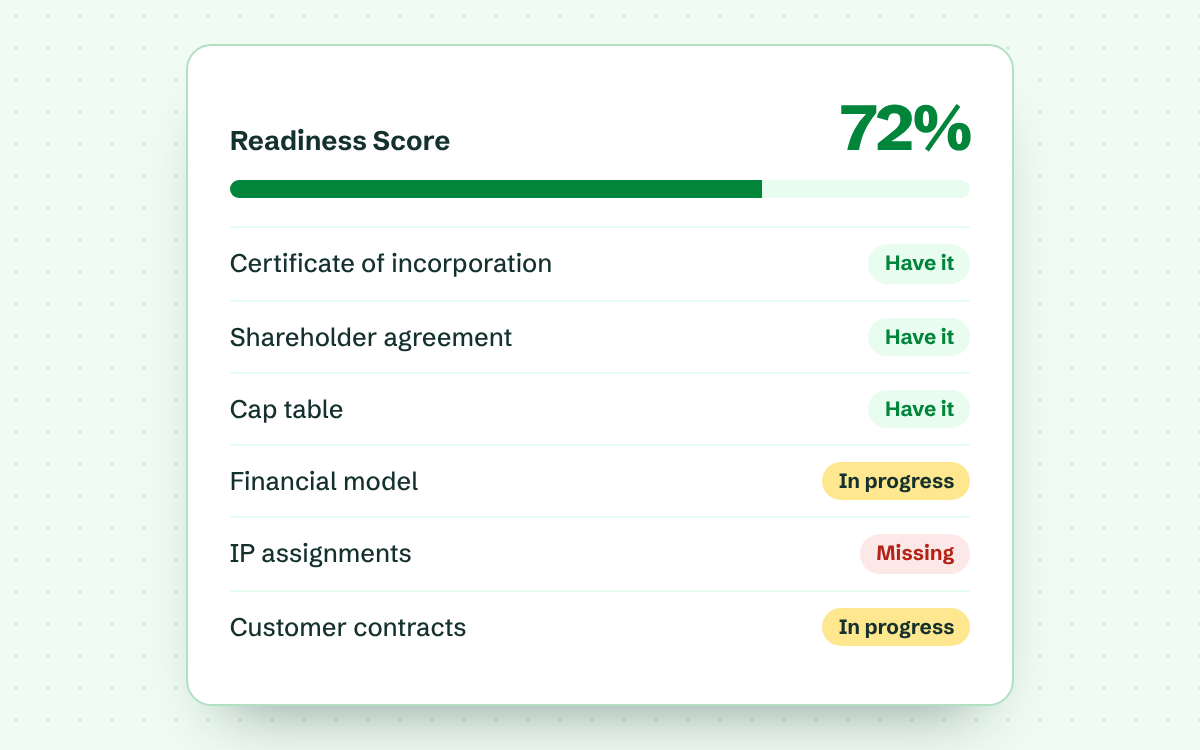
- Mark each document. Set the status to Have it, In progress or Missing.
- Watch the Readiness Score. The score updates as you mark documents off, so you always know how close you are to diligence-ready.
Every document comes with a short explanation of why investors want it. A Notes column gives you space for context, links or reminders.
The eight document categories
The checklist groups every document into the eight areas investors review.
- Corporate and Legal. How the company is set up and what it has agreed to.
- Financials. Historical numbers and your forward plan.
- Cap Table. Who owns what. Build yours with the Startup Cap Table Template.
- Product and Technology. What you have built and what you own.
- Team. Who is doing the work and on what terms.
- Market and Traction. The size of the opportunity and the evidence you are winning it.
- Customers and Revenue. Who pays you and how reliably.
- Pitch Materials. The deck and supporting documents.
What's inside
- Three stages covered: Pre-Seed, Seed and Series A, each showing only what is relevant
- Eight document categories, from Corporate and Legal to Pitch Materials
- A "Why investors want it" column explaining the purpose behind every document
- A Readiness Score that updates as you mark documents off
- Status tracking per document: Have it, In progress or Missing
- A Notes column for context, links or reminders
How to build your data room with the checklist
- Start with what you have. Mark every document you already hold as Have it, so the Readiness Score shows your real starting point.
- Close the gaps that block a deal. Missing corporate, legal and cap table documents are often the ones that stall diligence, so fix those first.
- Upload as you go. Move each finished document into a folder that mirrors its category.
- Use the Notes column. Record where a document lives, who owns it, or what is still outstanding.
- Review it before every round. The documents investors expect change by stage, so revisit the checklist when you move from seed to Series A.
A data room built this way is ready before the first investor asks. That shortens diligence and signals that the company is well run.
Who it's for
- Founders preparing for their first investor conversations
- Startups entering a formal fundraising process at any stage
- Operators who want to build their data room before investors ask for one
- Advisors and accelerator teams helping founders get diligence-ready
Data room questions founders ask
What is a startup data room?
A data room is a secure online space where you keep the documents investors review before they commit. It holds your legal, financial and commercial records in one organised place, with control over who can open what.
When should I set up my data room?
Before you start the raise. Investors move faster with founders who can share documents the same day they are requested. Building the room early also shows you which documents are missing while there is still time to fix it.
What do investors expect at pre-seed compared with Series A?
Expectations grow with the stage. Early investors mostly want to see that the company is properly set up and that ownership is clear. By Series A they expect a full financial history, customer contracts and detailed metrics. The checklist filters to the right list for your stage.
How should I organise the folders?
Mirror the eight categories in the checklist. Investors are used to that structure, so they find what they need without asking. Number the folders so they stay in order.
What should I leave out of a data room?
Leave out anything you are not ready to stand behind and anything that exposes personal data without a reason. Share sensitive documents, such as customer contracts, later in the process and only with the investors who need them.
How do I share a data room securely?
Use a tool built for it. Pitchwise is a secure document and virtual data room tool: you set who may open each file, and you see who viewed what. See how Pitchwise data rooms work.
Who should see my data room?
Only investors who are seriously considering the deal, usually after a first meeting. Share the most sensitive documents later, and only with the investors who need them.