
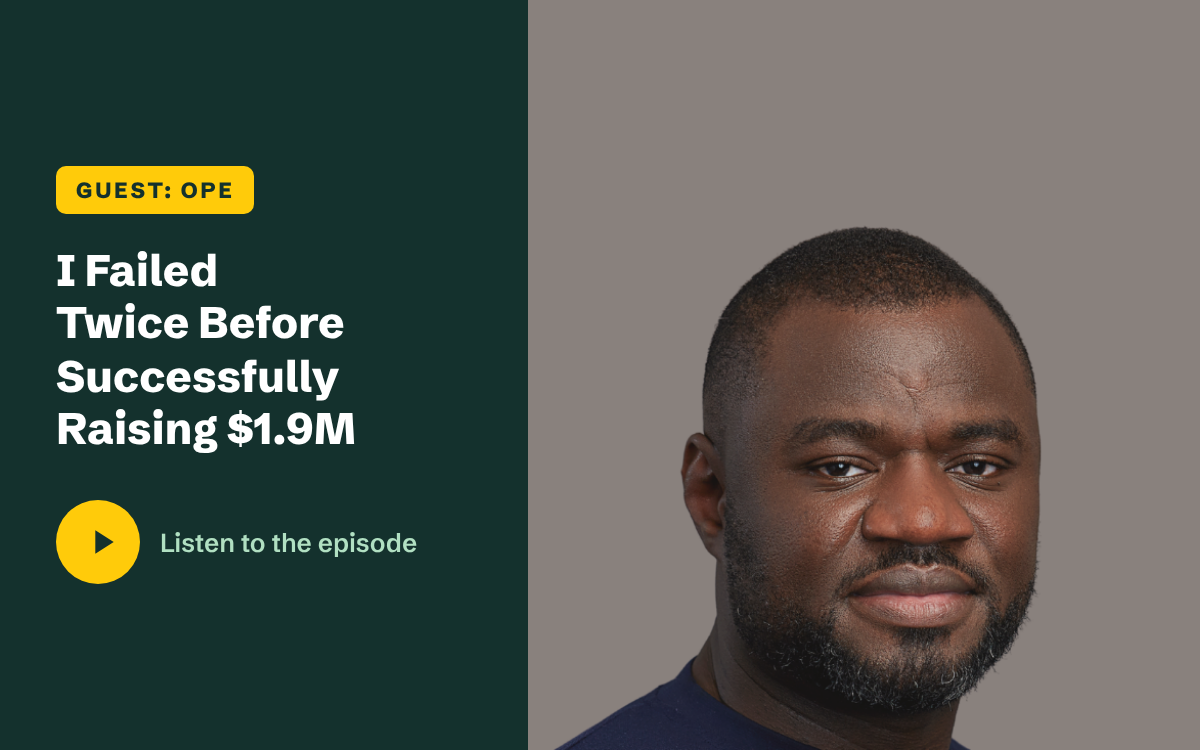
Ope Onaboye has spent more than 10 years in the African tech ecosystem and has seen the highs and lows of entrepreneurship. In this episode, the CEO and founder of Renda Africa shares the fundraising journey behind his latest milestone: a $1.9 million pre-seed round led by Ingressive Capital, after two earlier attempts that did not succeed.
Key takeaways
- Do not build in isolation. Make your product known in the ecosystem.
- Lean on your network. Support and connections help you close a round faster.
- Do not take a no personally. When investors say no, absorb their feedback quickly and move on.
About the guest
Ope Onaboye is the CEO and founder of Renda Africa and a serial entrepreneur with more than a decade in African tech.
What failed raises can teach you
Most founders hear far more noes than yeses. A failed raise is painful, but it also carries information that is hard to get any other way.
- Investor feedback. Patterns in why investors pass often point to something you can fix: unclear positioning, missing traction, a weak team slide or the wrong investors for your stage.
- Timing. Sometimes the business is sound, but the market, or the moment, is wrong. Knowing that helps you plan the next attempt.
- Network. Every conversation, even an unsuccessful one, builds relationships. Investors who said no early often reconnect when they see progress.
- Visibility. Building in isolation makes raising harder. Founders who share their progress openly in the ecosystem often find that investors, partners and customers come to them.
The episode's message is that persistence works best when it is combined with learning. Taking a no personally slows you down; absorbing the feedback quickly speeds the next attempt.
It also helps to lean on the people around you. Other founders, angels and advisors can make introductions, review your pitch and vouch for you. A strong network can turn a slow, uncertain raise into a faster one.
Questions to ask yourself after listening
- What reasons have investors given for passing, and do any repeat?
- Who in my network could make a warm introduction this week?
- How visible is my company in the ecosystem, and how could I change that?
- What would I do differently in my next raise?
How to build visibility before you raise
- Share progress publicly. Post milestones, customer wins and lessons learned where your ecosystem pays attention.
- Show up at events. Demo days, meet-ups and conferences put you in front of investors and partners without a cold email.
- Help other founders. Making introductions and sharing advice builds goodwill that often returns when you need it.
- Keep investors informed. Add investors you meet to a short, regular update, even before you are raising.
- Make your product easy to try. A demo, free trial or pilot lets people see the value for themselves.
When it is time to raise, this groundwork means investors already know your name and your progress. Conversations start warmer and close faster, which is the effect the episode describes when it talks about leaning on your support network.
Who should listen
- African founders
- Entrepreneurs building their first company
- Startup advisors and ecosystem builders
Put the advice to work
Getting the meeting is half the battle. Read What Makes a VC Say Yes to the First Meeting?, then prepare with 18 Questions VCs Ask During Intro Calls.
Fundraising setback questions founders ask
How should I respond when an investor says no?
Thank them, ask for honest feedback and ask whether you can keep them updated. A respectful response keeps the door open.
How long should I wait before trying to raise again?
Until you have meaningful new progress to show or have fixed what held you back. Returning with the same story rarely changes the answer.
What is a pre-seed round?
Often the first outside money a startup raises is used to build the product, test the market and reach early traction.
How do I keep going after repeated rejection?
Treat each 'no' as data, not a verdict. Track the reasons, fix what you can and lean on other founders who have been through it.
What role does a network play in closing a round?
A strong network brings warm introductions, references and momentum. Investors are more likely to move when people they trust vouch for you.
Who led Renda Africa's pre-seed round?
According to the episode page, the $1.9 million pre-seed round was led by Ingressive Capital.
Is it normal to fail at fundraising before succeeding?
Yes. Many founders go through unsuccessful raises before closing a round. What matters is what you learn and change before the next attempt.