
Early-stage founders sign contracts long before they can afford a legal team. This pack gives you a sound starting point for the agreements that come up first, so you are not drafting from a blank page or copying a document written for a different kind of company.
- Pick the agreement you need. Each template covers one common situation.
- Fill in your details. Replace the placeholder names, dates, amounts and terms with your own.
- Get it reviewed. Ask a lawyer who knows your jurisdiction to check it before anyone signs.
The templates are a starting point and not legal advice. Contract law differs between countries, and the right terms depend on your situation.
What's inside
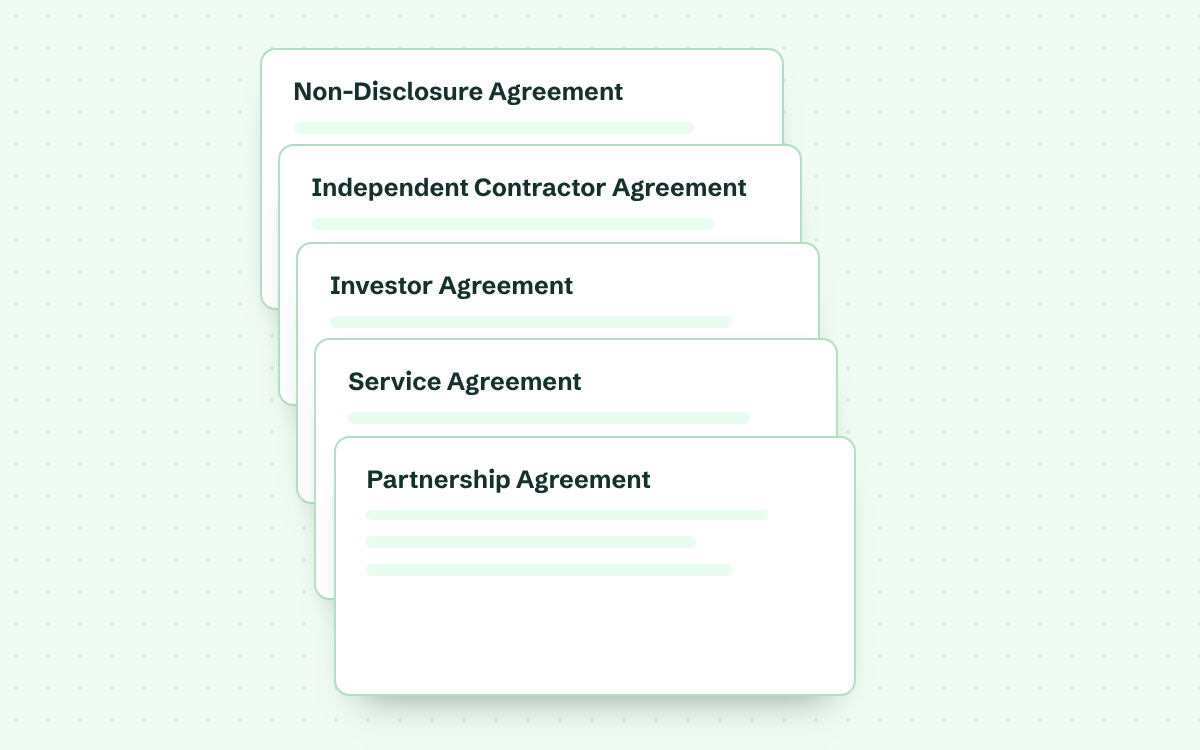
- Non-Disclosure Agreements. Protect confidential information you share with partners, contractors and candidates.
- Independent Contractor Agreements. Set the scope, payment and ownership of work done by freelancers and agencies.
- Investor Agreements. Record the terms on which an investor puts money into the company.
- Service Agreements. Define what you deliver to a customer, or what a supplier delivers to you.
- Partnership Agreements. Set out how two parties work together and share the results.
- and more.
Contract basics every founder should get right
- Sign as the company. Contracts should be in the company's name, not yours personally.
- Define the scope. Vague descriptions of work or services lead to disputes later.
- Assign intellectual property. Make sure anything built for the company belongs to the company.
- Set payment terms. State amounts, currency, due dates and what happens if payment is late.
- Agree how it ends. Include notice periods and what happens to confidential information afterwards.
- Keep signed copies. Store final, signed versions where you can find them during diligence.
Who it's for
- Founders and startup teams signing their first commercial and investor agreements
- Advisors and mentors helping early-stage companies put the basics in place
- Accelerators, hubs and other ecosystem teams supporting a portfolio of startups
Contract questions founders ask
Are contract templates legally binding?
A contract is binding when the parties agree to it and sign it, whether it began as a template or not. What a template cannot do is guarantee that the terms suit your situation or are enforceable where you operate. That is what legal review is for.
Do I still need a lawyer if I use a template?
Yes, for anything that matters. A template cuts the cost because the lawyer reviews and adapts a draft instead of writing one. Investor agreements in particular should always be reviewed.
When does a startup need an NDA?
Use one when you share information that would hurt you if it leaked, such as source code, customer data or unreleased plans. Do not expect investors to sign one before seeing your pitch deck. Most will decline, and asking can slow the conversation.
What is the difference between a contractor agreement and an employment contract?
A contractor runs their own business and delivers defined work. An employee works under your direction as part of your team. The difference affects tax, benefits and who owns the work, and the rules vary by country. Getting it wrong can be costly, so check locally.
Who owns the work a contractor produces?
Not automatically you. In many countries the contractor keeps the intellectual property unless the agreement assigns it to the company. Investors check this in diligence, so make sure every contractor agreement includes a clear assignment.
How should I store and share signed contracts?
Keep signed copies in one secure place, because investors will ask for them in diligence. Pitchwise is a secure document and virtual data room tool, so you can share contracts by link, control who opens them, and see who viewed them. The Startup Data Room Checklist shows which contracts investors expect at each stage.
Can I edit the templates?
Yes, they are a starting point. Change the names, dates, amounts and terms to fit your deal, then have a lawyer review the final version.
What is the difference between a service agreement and a partnership agreement?
A service agreement covers one party delivering work to another for payment. A partnership agreement sets out how two parties work together towards a shared goal, often sharing costs, revenue or risk.
Should co-founders sign an agreement?
Yes. A founders' agreement covering ownership, vesting, roles and what happens if someone leaves prevents expensive disputes later.
Are free contract templates safe to use?
They are safe as a starting point, provided a qualified lawyer reviews the final version before anyone signs it.